


CryptoJewelerRobinhood ChainWhitepaper v2.2
Own the culture.Earn the gold.Forge it forever.
3,000 pendants on Robinhood Chain. Each one earns real gold, silver or platinum in daily rounds, funded by trading and by every piece that sells within the collection. Every part is a production file. Choose the centerpiece and the metal. We make it for real.
3,000 digital pendants.
Thousands of possible combinations.
One empty center.
What goes there is up to you.
Customizable jewelry with interactive rewards.
3,000 pendants on Robinhood Chain, each makeable in silver, gold or platinum. Every part of every pendant is a production file. Activate one and it earns real metal in daily rounds. Gold by default, silver or platinum if you choose, bought on the open market with fees from trading and from every piece that sells within the collection. When you are ready, choose the centerpiece and the metal. We make the piece for real, and your earnings come off the price. When a piece is made physically, your digital pendant becomes a soul and earns its share of a 10% rewards pool forever.
01 Trading and pieces made real pay fees.
02 Fees buy real gold, silver or platinum on the open market.
03 Pendants that are on earn that metal every round, by level.
04 Holders burn $KARAT to activate and level up. Supply only falls.
05 Make it real: the relic ships, and the pendant becomes a soul.
06 Souls share a tenth of every round. Fewer pendants share the rest.
The promise and the payment are the same substance.
Pendants earn precious metal. The thing you can have made is made of it. Earning and making are separate. A pendant earns because it is on, not because it is saving toward a purchase. The gold in your hand and the metal in the piece are the same substance.
The token is a sink. Never a faucet.
$KARAT is never emitted, never paid out, never staked for more of itself. It is bought on the open market and destroyed in use.
Two industries. The same missing piece.
Fine jewelry cannot tell you what it is worth. Web3 cannot make anything you can wear. Both problems have the same solution, and almost nobody is positioned to build it.
The jewelry industry runs on opacity. A customer takes it on faith that the metal is what the tag says, that the stones are what they are called, and that a four-times markup reflects something other than a shop floor and unsold inventory. Provenance is a paper certificate in a drawer. Authentication is a relationship with a jeweler you hope stays in business. Nobody publishes the arithmetic, because the arithmetic is the business.
Web3 has the opposite problem. It has solved provenance, ownership and verifiable scarcity completely, then applied all of it to objects that do not exist. On every chain, the best projects have converged on the same architecture: a capped collection, a token that gates participation, and fees that accumulate value inside the NFT itself. It works. But every exit from those systems is a sale. Value enters as speculation and leaves as speculation, and nothing is ever made.
M3MORIES closes both gaps with one mechanic. A pendant built from real production files, earning real metal toward the moment it becomes the object it depicts.
Your savings and your jewelry are the same substance.
Five years of shipped work.
M3MORIES is built by Michael Ray, the CryptoJeweler, who spent eight years as a senior CAD designer at the largest fine-jewelry manufacturer in the United States before bringing the craft on-chain in 2021. Every component in M3MORIES was modelled by someone who has sent thousands of files to a casting house and knows what comes back. The collection is not artwork that might one day be manufacturable. It is manufacturing data that happens to be beautiful.
CryptoJeweler has released Chains and ChainsDrops on Ethereum, and EGG$ with its Cores and Parts system on ApeChain, a live collection where holders vault their Eggs to earn YOLK, claim new components, set them into their pieces permanently, and merge four smaller Eggs into one. Alongside it: a token-gated storefront, more than fifteen brand collaborations, and a full influencer programme delivered end to end: design, token-gating, production and fulfillment.
The part that took longest was not the art. It was fifteen months of sourcing and qualifying production capable of making what the files describe, at the standard the brand requires. That relationship is the hard, unglamorous asset underneath everything in this document.
Digital first. Nothing is made until it is sold.
No inventory. No unsold stock. No showroom overhead priced into the piece. CryptoJeweler prices at roughly twice fully-loaded cost. The industry norm is above four times. That difference is what pays a share of revenue back to the people who hold its collections.
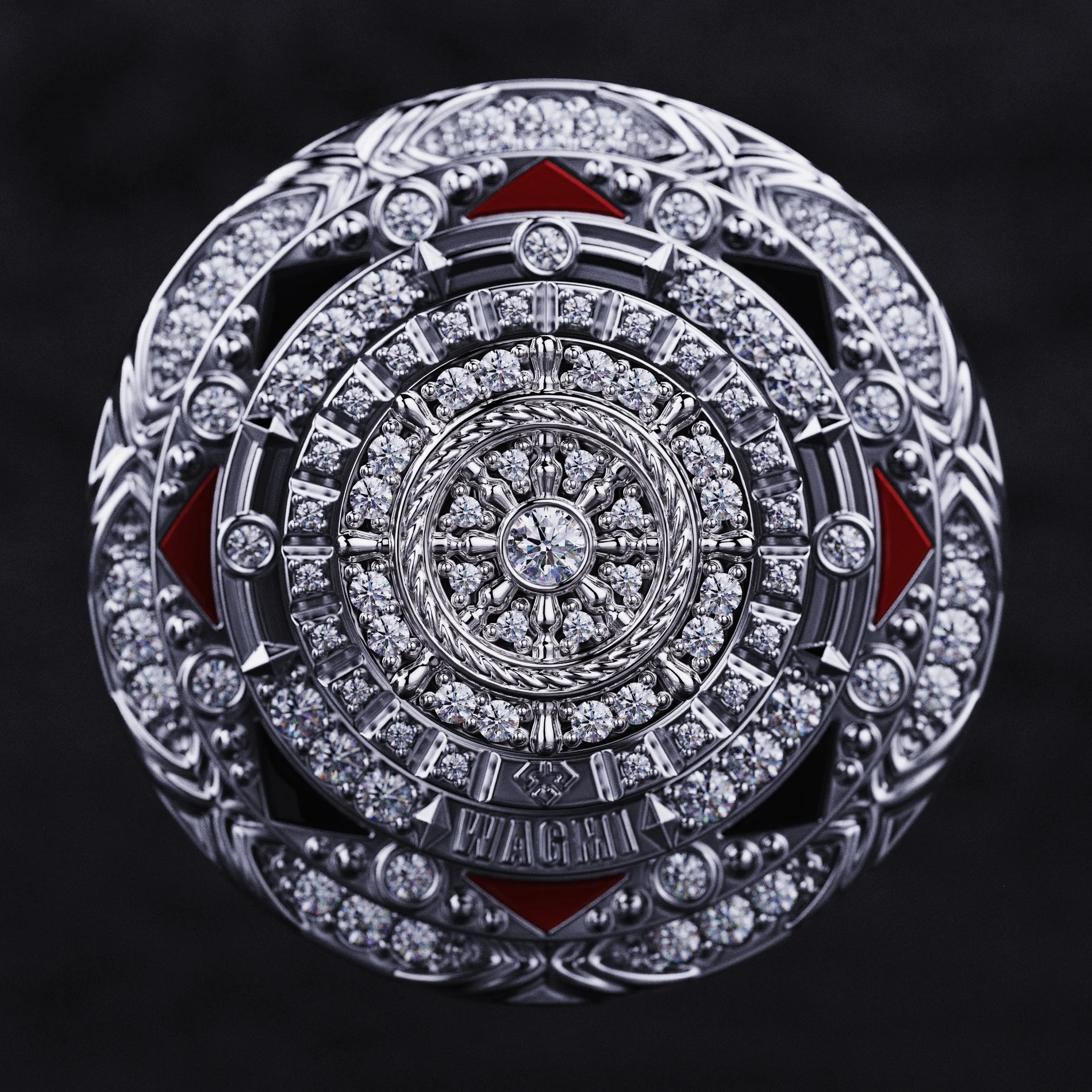
Designed to be made. Not just minted.
Every part you see is a production file. The art is the casting file.
Four layers. All of them real.
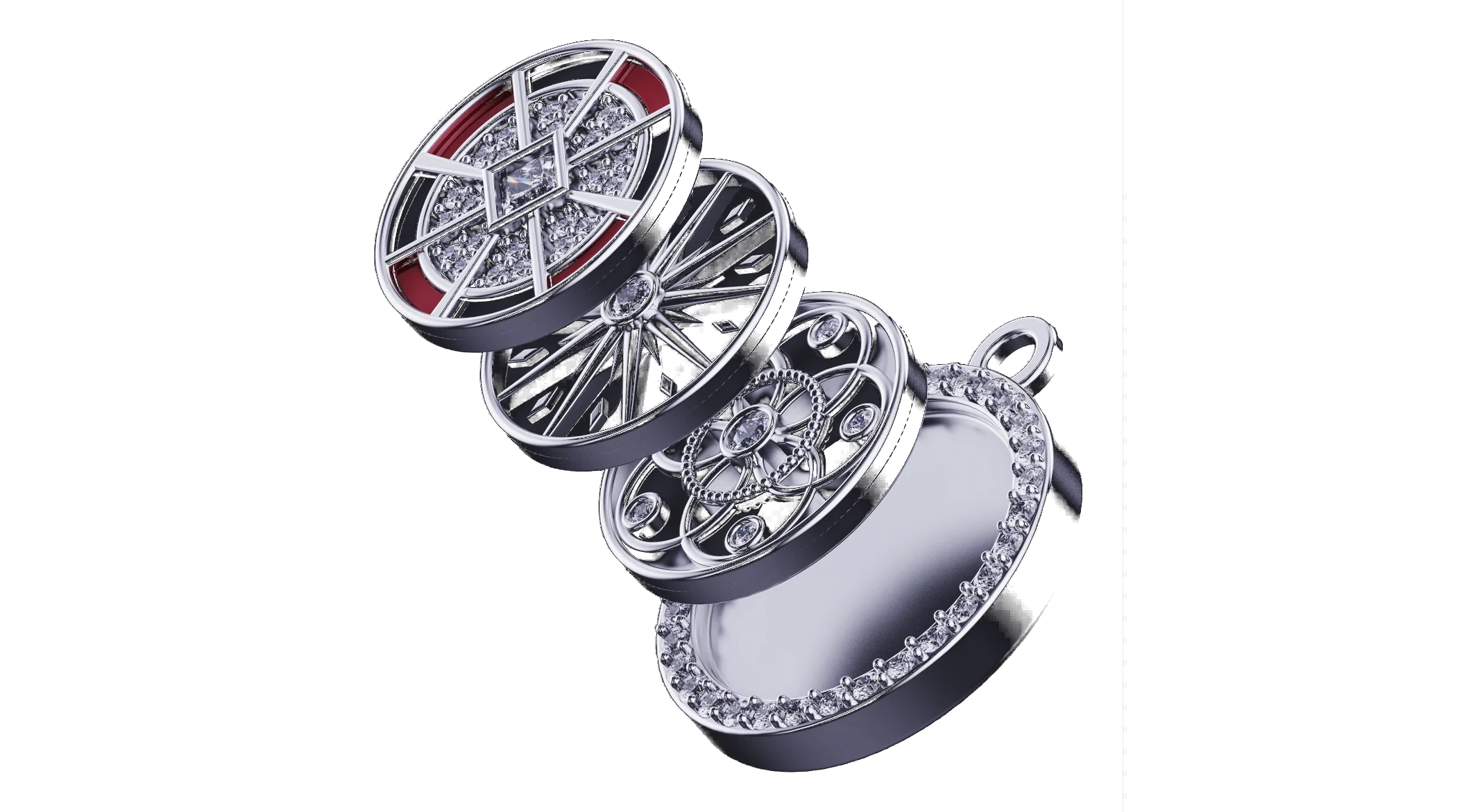
Halo, base & bail
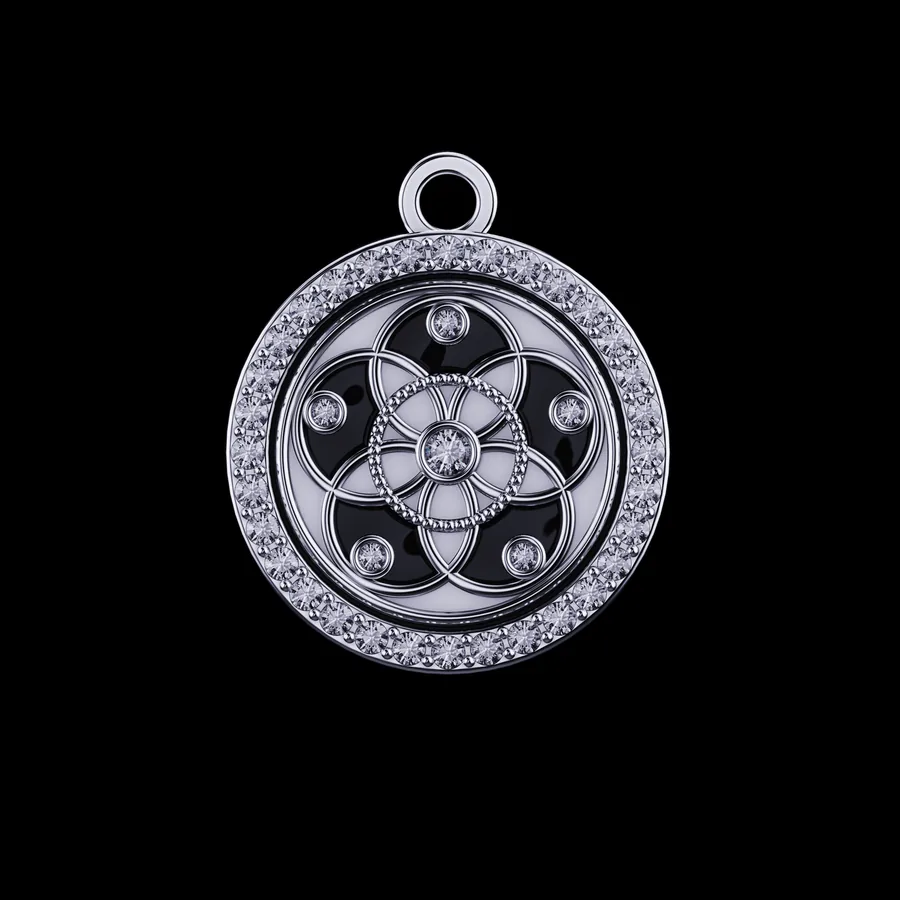
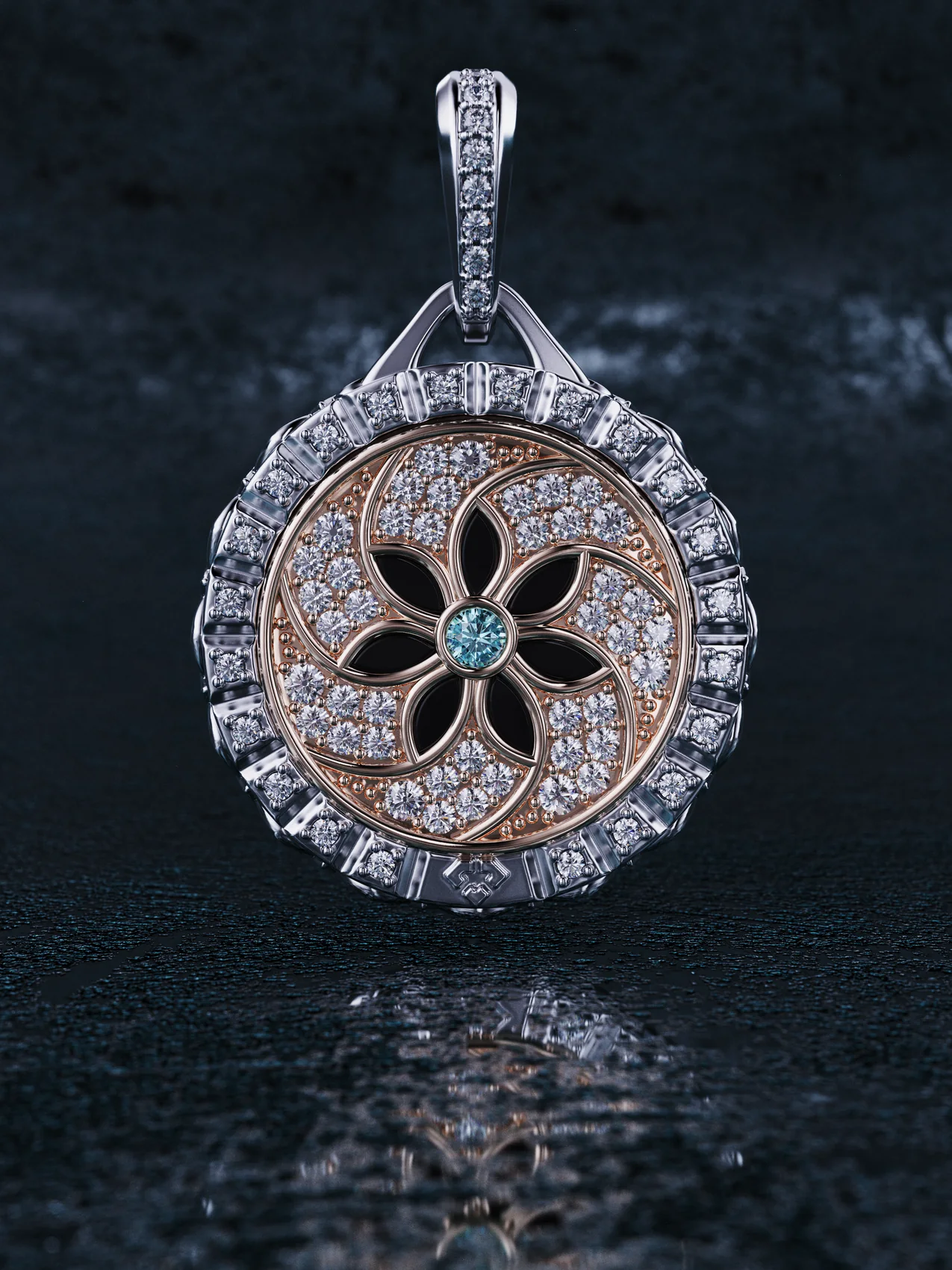
30 hand-modelled parts in three colors, makeable in silver, gold or platinum. Every one costed and ready to cast. The base is the body. The bail is what the chain runs through. The halo is the ring around the center.
The centerpiece
Empty while you hold it. You choose what goes here when you make it real, not before.
Earn gold.
Activate it. Real gold, silver or platinum lands every day. Keep it, or put it toward the real piece.
Every part is a production file.
Behind each component sits a production .3dm, a print-ready .stl, an augmented-reality .glb, a creator-facing .fbx, and a costed data sheet with metal weight, diamond weight and value. Those values compile up the four layers into a total for the finished pendant. A pendant is not a picture of jewelry. It is a complete bill of materials and a set of casting instructions.
Random draw. No tiers.
Every pendant is drawn at random from one pool. There are no reserved allocations, no premium band, and no way to buy a better draw. Whoever claims it and however they got there, what you receive is what the draw gives you: a color and a set of parts. Rarity is drawn. Standing is earned. A pendant's place in the earning system is not something it is born with; the only way to raise it is to burn $KARAT, and every holder starts from exactly the same place.
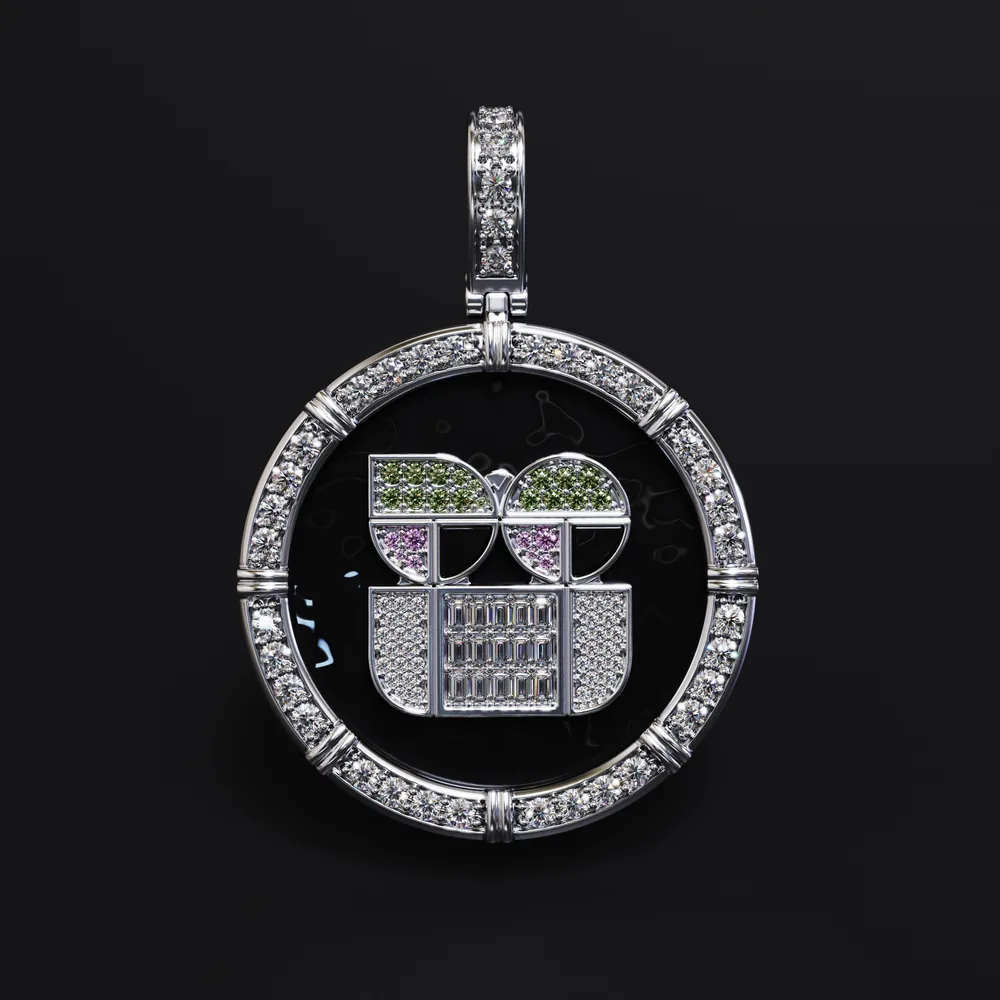
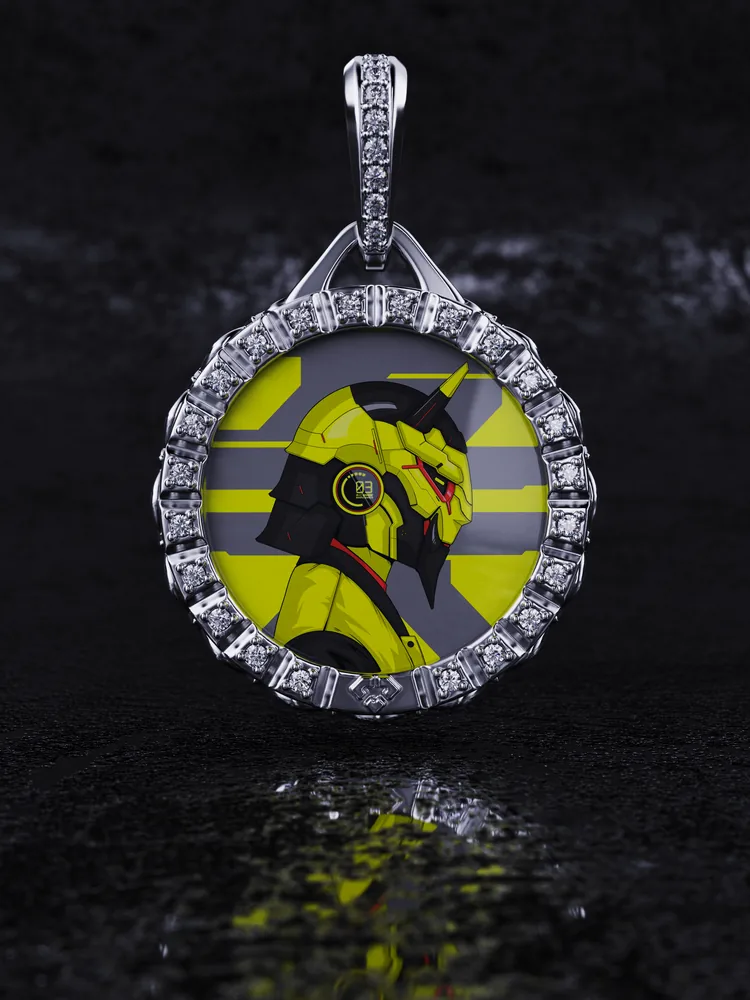
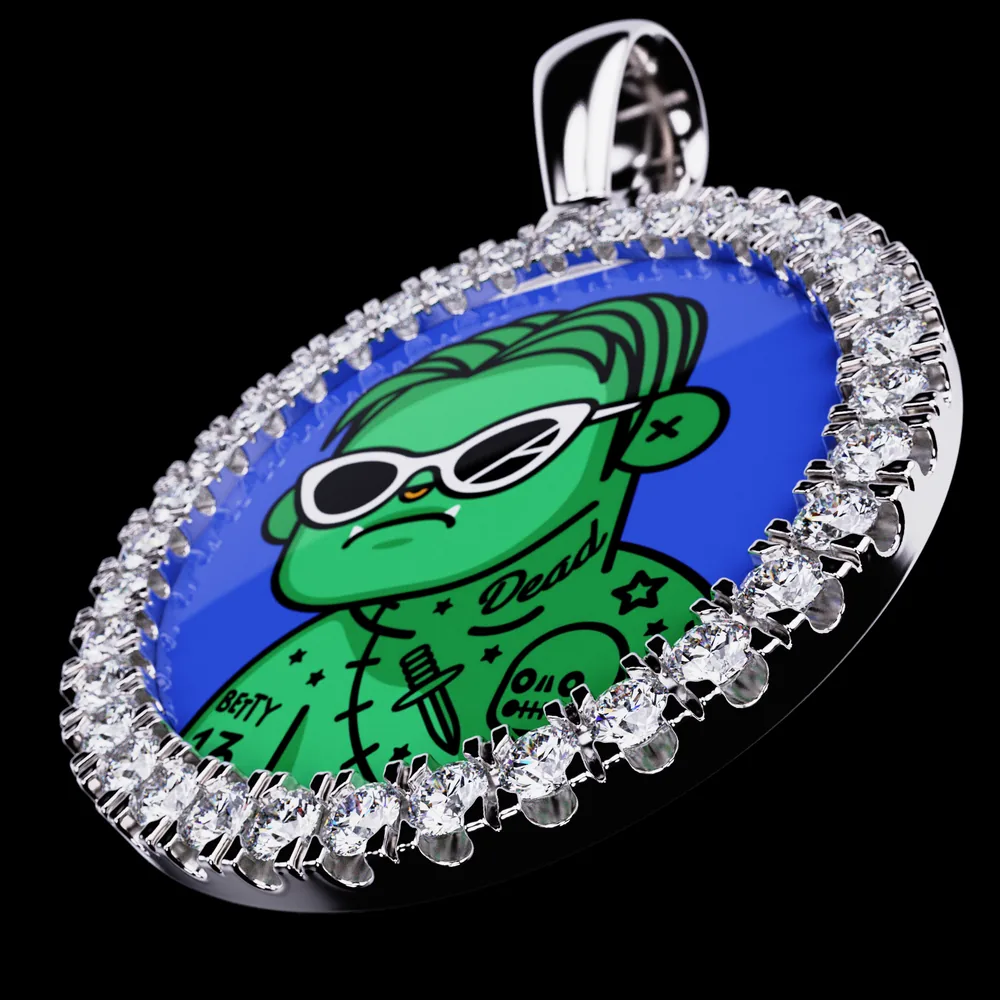
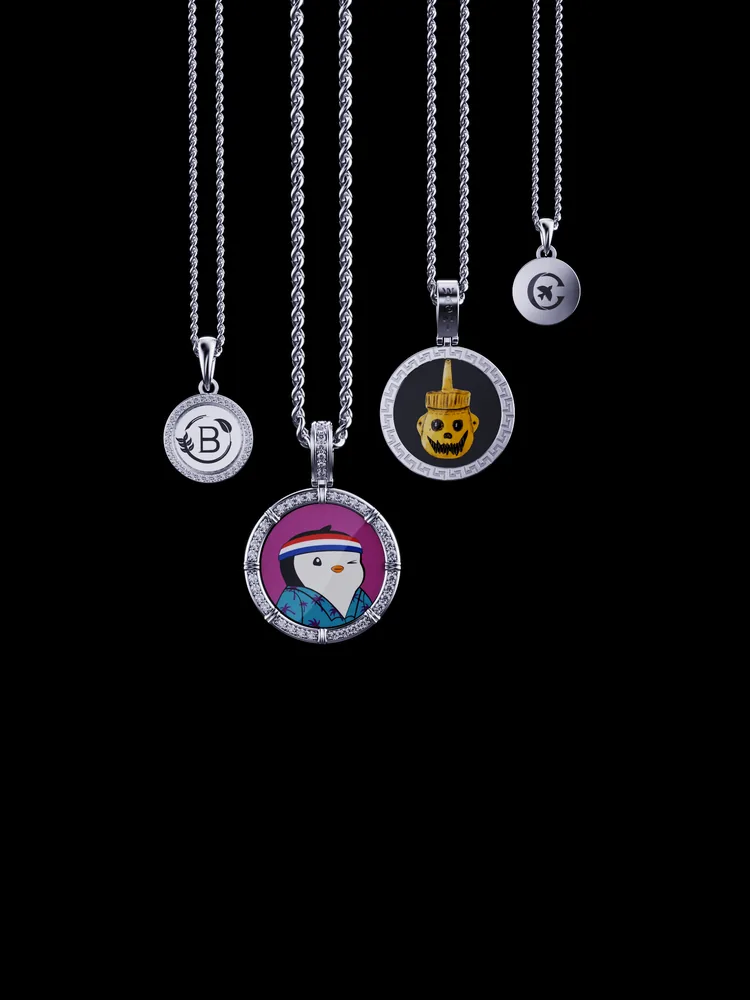
Your PFP. Cast in gold.
An NFT. A photo. A piece of art. Anything you own goes in the center. Any collection can become real jewelry. A holder of any collection on this chain can set their piece into a M3MORIES pendant and have it made. It costs those projects nothing. Sterling silver, 10K to 18K gold in your color, or solid platinum. You choose the metal when you make it.
From file to finished piece.
Order
You choose the centerpiece. It is cropped, set into the design, and written into the record with its creator and the date. The production files compile automatically.
Cast
Each component is printed and cast in the metal you chose: silver, gold in the pendant's color, or platinum. Diamond-set parts go to the setter.
Finish
Assembled, polished, quality-checked against the specification sheet the collection itself generated.
Hallmark & ship
The piece ships with an on-chain hallmark carrying its full provenance: what it was, who chose the center, when, and what it is made of.
What a piece costs.
Physical pieces are priced at roughly twice fully-loaded cost, the same model as the rest of the CryptoJeweler catalogue and well below the industry's four-times norm. In the costed library, finished gold pendants land between roughly $1,000 and $1,700 at catalogue value, from a plain Pure base with a Royal bail to a 1.7 mm diamond base with a diamond bail and a Rope halo. The same designs in silver cost a fraction of that; in platinum they are priced on the metal's own weight and market.
Two numbers are published for every piece and never blurred: what it contains, and what it costs to make. A piece costs more than its metal, because the price also covers design, casting, setting, finishing and the people who do that work. Neither number is typed in. Both are computed on-chain from the piece's own specification and a live metal feed, by a formula anyone can read and re-run (§09). The catalogue reprices at launch against the metal prices on the day. The figures above are from when the library was costed.
Five metals.
Every pendant can be made in any of five metals. The design does not change. The metal does, and with it the weight, the price, and how soon your earnings cover it.
| Metal | Color | Notes |
|---|---|---|
| 925 sterling silver, palladium-coated | White | The most accessible exit. Palladium over sterling keeps it bright and slows tarnish. |
| 10K gold | Your pendant's color | The hardest-wearing gold. |
| 14K gold | Your pendant's color | The middle of the three. |
| 18K gold | Your pendant's color | The richest gold we cast. |
| Solid platinum | White | The densest and most durable; the same design weighs more. |
Color. The draw gives every pendant a color: white, yellow or rose. Gold keeps it. Silver and platinum are white metals: a yellow or rose pendant made in either becomes a white piece, and the record shows what was made.
Price. The same design, five prices. Each is quoted in its own metal (§09), and your pendant shows all five against what it has earned. Silver is the fast exit; platinum is the long one. The earn rate is the same whichever you choose.
Not yet costed. The library is costed in gold. Silver and platinum weights follow from the same files by density, but their prices have not been run. That is a gate in §14.
Three states.
A pendant moves through three states in its life. It spends almost all of that life in the second one, quietly earning. The third is the one nothing else on-chain has.
New
Minted, asleep. Halo, base and bail assembled from the draw; the center empty; the background black. It already carries its full specification. It earns nothing until you activate it.
ASLEEPNOT EARNING
Earning
Burn $KARAT to activate it. Your metal lands every day. Climb the ladder to raise your share. Most pendants live their whole life here.
ONEARNING DAILY
Made
You choose the centerpiece and the metal. A RELIC is cast, finished and shipped. The pendant does not burn. It converts in place into a SOUL: the piece's record on-chain, and a permanent weight in the soul pool. A pendant becomes one-of-one and becomes an object in the same transaction.
THE RELIC SHIPSTHE SOUL STAYS
Two different things.
The system runs on two things, and keeping them straight is the key to everything that follows. $KARAT sets how fast you earn. The metal is what you keep.
You buy it. You burn it.
Never earned. Never farmed. Never staked for more of itself. Buy it, burn it. It activates a pendant, climbs the ladder, opens the Vault, and discounts everything CryptoJeweler sells. Burned means gone forever.
SUPPLY ONLY SHRINKS
You don't buy it. You earn it.
Real gold, silver or platinum, your choice, earned round after round. It lives in your pendant and travels with it if you sell. Not staked. Not lent. Yours, growing.
IT PAYS TOWARD THE REAL PIECE
| $KARAT | Earned metal | |
|---|---|---|
| What it is | A token, traded on the open market | Tokenized gold, silver or platinum, held inside a specific pendant |
| How you get it | You buy it, or it arrives with a holder pass. Never emitted, never farmed | It accrues. Automatically, every round, to pendants that are on |
| Where it lives | Your wallet | Inside the NFT. It travels with the pendant on resale |
| Supply | Fixed at 1,000,000,000, and only ever falls | Grows every round |
| What it buys | Standing: activation, levels, the discount ceiling, Vault entry | The piece itself |
| When spent | Burned. Permanently destroyed | Transferred to CryptoJeweler, funding production |
| Price exposure | Open market | The metal's spot price |
Metal is bought on the open market with fee revenue, so redeeming it puts no selling pressure on $KARAT. None. The protocol never sells $KARAT under any circumstance. It only ever burns it. The two never substitute for each other.
What "tokenized metal" actually is.
On Robinhood Chain, gold trades as the GLD Stock Token, silver as SLV, and platinum as PPLT. These are tokenized instruments tracking SPDR Gold Shares, the iShares Silver Trust and the abrdn Physical Platinum Shares ETF, issued by Robinhood Assets (Jersey) Limited as tokenized debt securities, each backed one-to-one by the underlying ETF shares held with a U.S. custody partner, and traded against USDG on the chain's own exchange. Corporate actions are handled by an on-chain multiplier rather than by changing balances, so the number in your pendant never moves except when metal lands in it.
We will say what that is and is not. It is real, verifiable exposure to the price of the metal, settled on the same chain as everything else in this system. It is not a bar in a vault with your name on it. The metal that ends up around your neck is bought by the bench when the piece is made.
Who can hold it.
Robinhood's Stock Tokens are not available to residents of the United States, Canada, the United Kingdom or Switzerland. That almost certainly includes a large share of the people who already hold CryptoJeweler collections. The design accounts for it from the start.
The design answer is a payout election per pendant: each holder chooses which metal their pendant accrues and in which instrument. The system defaults to gold, in the best instrument their jurisdiction allows. The election can be changed once a day, and it is meant to follow the metal you intend to make the piece in.
The price of making a piece real is quoted in the metal it will be made in. A holder earning that same metal is matched: what they have earned and what the piece costs move together. A holder earning a different metal, or USDG, carries the spread between them on whatever remains. The pendant says so, next to the number.
Pendants accrue metal, or dollars where metal cannot be delivered. Never tokenized equities: the pendant earns the thing it is made of.
Activate it. Earn every day.
A pendant does nothing until it is activated. Activating it costs 24,000 $KARAT, burned, and starts the pendant earning metal from the next round on. Nothing to claim. Nothing for you to sign. It keeps earning whether you are watching or not, and whether or not you ever make anything.
Burn more and the pendant's level rises, and with it its share of every future round. This is the only way standing changes. It cannot be minted, drawn, bought as a bundle or granted. It is burned into the pendant one level at a time.
The karat ladder.
| Level | Share weight | Total burned | $KARAT discount cap | Also unlocks |
|---|---|---|---|---|
| 10K | 1.0× | 24,000 | 10% | Earning begins; making it real enabled |
| 14K | 1.4× | 75,000 | 15% | |
| 18K | 1.9× | 150,000 | 20% | Priority in the production queue |
| 22K | 2.5× | 300,000 | 25% | Premium catalogue |
| 24K | 3.5× | 850,000 | 25% | 1/1 catalogue; first refusal on custom work |
Burns are cumulative. Climbing costs only the difference. A 24K pendant earns three and a half times what a 10K pendant earns from the same round. The discount cap is the most of any CryptoJeweler purchase you may pay in $KARAT (§09).
Levels survive a sale. Earning does not. When a pendant changes hands it goes back to sleep, and the new owner burns their own 24,000 to wake it. Every resale is therefore a fresh, structural burn. No pendant is exempt. A Chains or EGG$ pass arrives holding the 25,000 $KARAT its activation costs, but the burn is still made and the level is still bought (§13).
Two things are called karat, and they never touch. Level names borrow gold's purity scale, but a level is an earning share, not a metal. A 14K-level pendant can be made in silver, 18K gold or platinum, and making a piece in 14K gold does not require the 14K level.
How a round works.
Earning is the whole utility. A pendant earns because it is on, not because it is saving toward a purchase. What it earns is yours: withdraw it, hold it, sell it, or spend it on a piece. Nothing is earmarked and nothing is held back.
Three things raise your rate over time. Your level, which you control by burning. The pool, which grows as more pieces are made real. And the denominator. Every pendant made real leaves the earning pool for good, and everyone still earning takes a larger share of what remains.
750 held back. One way in.
Seven hundred and fifty pendants, a quarter of the collection, are held back from distribution entirely. They are not airdropped, not sold for cash, and not reserved for insiders. They do not mint. They unlock only once the mint has closed, and the only way to obtain one is to buy $KARAT on the open market and burn it.
This is the door for everyone who was not here for the last five years. It means the collection is never closed to newcomers, and it means new interest arrives as open-market buying rather than as a private allocation. Every token spent this way is destroyed. Nothing is routed to a treasury and nothing comes back.
Because the price is set in tokens rather than dollars, the Vault balances itself. If $KARAT falls, entry gets cheaper in dollar terms, demand rises, and the buying burns supply until it does not.
Making it real doesn't end it. It converts it.
When you are ready, your pendant stops being only a token and becomes an object as well. Order the real piece whenever you want, in whichever of the five metals you want. Your gold is yours throughout. You may spend it on the piece, and most people will. Nothing obliges you to, and nothing was ever set aside for it.
This is also where the design is finished. You choose the metal and the image for the centerpiece here. The image is cropped, set into the piece, and written permanently into the record alongside its creator and the date. The metal sets the price. Then the production files compile, and the piece is cast, finished, quality-checked and shipped.
Why the price is quoted in the metal.
The price of making a piece real is quoted in the metal it will be made in, not in dollars. This is an accounting requirement, not a presentation choice. A price fixed in dollars would leave the obligation unhedged: a rise in the metal would raise what a holder has earned and raise the cost of production, with the sale price standing still. Quoted in the metal, both sides move together and the margin is preserved. That is why a pendant earns the metal it will be made of. Earn silver and make it in silver, or earn gold and make it in gold, and you are matched. Cross the two and you carry the spread between them.
The price, on-chain.
A jeweler's price is normally a number you are handed. This one is a number you can compute. Every input lives on-chain: the piece's own specification, the cost of the work, the multiplier, and a live market feed for the metal. Anyone can read them, rebuild any price we have ever quoted, and check the one in front of them before they pay it.
This is the answer to the opacity in §02. Not a promise that our prices are fair. A formula you can audit.
| Input | Kind | Where it comes from |
|---|---|---|
| Volume of each component | Configured | Measured from the same CAD file the part is generated and cast from |
| Carat weight & stone count | Configured | The same file |
| Fineness | Fixed | 925 silver 0.925 10K 0.4167 14K 0.5833 18K 0.750 Pt950 0.950 |
| Density per metal | Configured | Alloy constants. Turns one volume into five weights |
| Casting, setting, finishing, plating | Configured | Bench rates, per gram and per stone. Timelocked and published |
| Diamond price per carat | Configured | By the collection's quality spec. No reliable on-chain diamond index exists |
| Casting loss allowance | Configured | Basis points. Metal lost to sprue, scrap and polish |
| The multiplier | Configured | Published. 2× fully-loaded cost |
| Gold, silver, platinum | Market | Chainlink price feeds on Robinhood Chain, read live |
weight = volume × density(metal)
metal = weight × (1 + loss) × fineness × spot(metal)
stones = carats × perCarat
work = cast(metal) × weight + set × stones + finish + plate(metal)
price = (metal + stones + work) × multiplier
One volume, five weights, five prices. The same file that tells the bench what to cast tells the contract what to charge, which is the only reason a number this specific can be published at all.
The same pendant, five ways.
| Metal | Weight | Fine metal | Metal | Work | Cost | Price |
|---|---|---|---|---|---|---|
| 925 silver | 8.7 g | 8.0 g | $13 | $112 | $125 | $250 |
| 10K gold | 9.7 g | 4.1 g | $542 | $113 | $655 | $1,310 |
| 14K gold | 11.0 g | 6.4 g | $857 | $123 | $980 | $1,960 |
| 18K gold | 13.1 g | 9.8 g | $1,315 | $140 | $1,455 | $2,910 |
| Platinum 950 | 18.0 g | 17.1 g | $880 | $456 | $1,336 | $2,670 |
Illustrative. One plain 20 mm base of 0.84 cm³, no stones, at assumed spot prices of $130/g gold, $1.60/g silver and $50/g platinum, a 3% loss allowance, and the bench rates above. Live feeds replace every price here. These figures sit above the library's original costing because gold has moved since. That is the point of reading the number from a feed instead of a spreadsheet.
Three things fall out of that table. Silver is a different product. A $250 piece is covered by earnings in a fraction of the time a $2,900 one takes, and it is the reason the collection is not only for people who can spend four figures. Platinum costs less in metal than 18K gold and more in labour. It is denser, so the same design takes more grams. It also melts higher and cuts harder, and the bench rate reflects that. And the spread between the cheapest and dearest way to make one pendant is more than ten to one, which is why the metal is chosen at the end and not at the mint.
Quoted in the metal (§09, above), the silver piece asks about 156 g of silver and the 18K piece about 22 g of gold. Your pendant shows all five, live, against what it holds.
Where the feed can lie.
A price engine is only as honest as its oracle, so here is what can go wrong with ours.
The quote holds. A price is struck when you start an order and holds for a published window while you confirm it, so the number you agree to is the number you pay even if the feed moves underneath. If the window lapses, you get a fresh quote rather than a surprise.
What can change, and how. Bench rates, the per-carat figure, the loss allowance and the multiplier sit behind a timelock with public notice (§12); a change is visible before it takes effect and never applies to a quote already struck. The piece's own specification, volume, carats and stones, is written at mint and never changes at all. The market inputs change every block, which is exactly what they are for.
What making it real produces.
Two things, in one transaction. A RELIC, the physical piece, cast in the metal you chose, finished and shipped. And a SOUL, what your pendant becomes. It does not burn and it is not replaced. The same token converts in place, so the object you have held all along is the object that now records the piece.
A paper certificate sits in a drawer until it is lost. A soul is the piece's record for as long as the piece exists, and it is bound to the object, not to you. Sell the piece and its soul goes with it.
This is the authentication product CryptoJeweler has described since 2021, arriving attached to something a customer already wanted rather than sold as a service on its own.
The soul pool.
Making it real is not an exit. The pendant does not burn, and whoever has a piece made keeps participating, because that is the one transaction this whole business runs on.
Souls share 10% of every round, forever, split between them by weight. Pendants that are still earning keep the other 90%. The share is capped at a tenth so that it cannot grow into the thing it is attached to. However many souls exist, nine-tenths of every round belongs to pendants that are on and burning.
| Rule | How it works |
|---|---|
| The pool | 10% of each round, shared by every soul. It grows toward that ceiling as souls are made, so the first one does not take a tenth from everyone on day one |
| Your weight | Set when the piece is made and never recalculated. Your level at that moment × an order band: 3× for the first 250 souls, 2× for the next 750, 1× thereafter |
| Why level matters | Burning $KARAT to climb before you make it real buys a permanently larger soul, so the token sink survives the conversion it funds |
| On resale | The record travels with the piece. The reward weight does not. It extinguishes on first transfer |
Two things follow. Making it real early is worth more than late, permanently: a soul in the first two hundred and fifty holds three times the weight of one in the last two thousand, and holds it for good. And a soul's share is a weight, not an amount. What that weight is worth depends on how many souls exist and how busy the system is, exactly as a pendant's share does. Nothing here is a promised yield.
The reward belongs to whoever commissioned the piece. It cannot be bought second-hand, because it does not survive a transfer. That is deliberate. It is a thank-you for making something real, not an income stream with a market.
How it is paid.
| Rail | Asset | What happens to it | Effect on $KARAT |
|---|---|---|---|
| Primary | Earned metal | Transfers to CryptoJeweler; sold on the open market to fund production | None |
| Optional | $KARAT, up to your level's cap | Burned in full. Never sold | Open-market demand, then permanent supply reduction |
| Remainder | Card or USDG | Ordinary sale proceeds | None |
$KARAT received in payment is never sold to fund production. Metal settles into a market deep enough to absorb any redemption without moving the price; $KARAT is burned into a market that is not. Reversing those roles would make every manufactured piece a market sale of the token.
The waterfall.
Let R be the retail price and C the fully-loaded cost of goods. Pieces are priced at twice cost, so C = 0.5R. Earned metal credits at face and can cover up to R; any remainder is paid by card or USDG. $KARAT cannot be put toward a piece. It is bought and burned for standing — activation, levels, the Vault — and never for goods, so no sale of jewelry is ever a sale of the token. All metal received is sold to fund production. And σ = 5% of retail routes back into the metal pool for every pendant still earning.
net = R(1 − σ) − C
| Per 100 of retail | Paid in earned metal, card or USDG |
|---|---|
| Received | 100.0 |
| Cost of goods | −50.0 |
| Back to holders (σ) | −5.0 |
| Gross margin | 45.0 |
Every piece made real funds holders through σ, routed by the escrow contract in the transaction that pays the bench. No sale outside the collection is counted. Margin is not traded for token demand anywhere in this transaction: the token's demand comes from standing, which is bought and burned separately.
Why making it real is a closed loop. It is revenue: the earned metal funds production at gross margin, and it originated in market activity rather than company capital. It is deflation: one transaction removes a pendant from the earning pool and converts it into a claim worth a fraction of what it held, raising every remaining pendant's share of the ninety percent that stays with them. And it produces the marketing: each piece made is a physical object, often carrying another collection's artwork, that exists whether or not the chain does.
What you keep.
The soul is a token-bound account (ERC-6551), which is what lets it hold its own record and, if you elect, receive its share directly. It carries the relationship forward: continued access to the token-gated storefront, priority allowlist on every future CryptoJeweler collection, and a visible record that you own something we made. Making it real is not an exit. You stop being a holder and become an owner, and you keep a seat.
Capacity.
Making jewelry takes real time, and quality is not something we will compromise to clear a queue faster. Orders are capped per period and the queue is public; higher levels get priority within it. If the queue grows, you will see it growing. The cap and the lead time publish before launch, and the Bench Reserve holds a buffer against demand that outruns them (§10).
Paying with $KARAT across the catalogue.
Across the entire CryptoJeweler catalogue, not only pieces made from pendants, a share of any purchase may be paid in $KARAT, up to the ceiling set by your pendant's level. That $KARAT is burned in full. It is never sold.
Nothing here is funded by printing tokens.
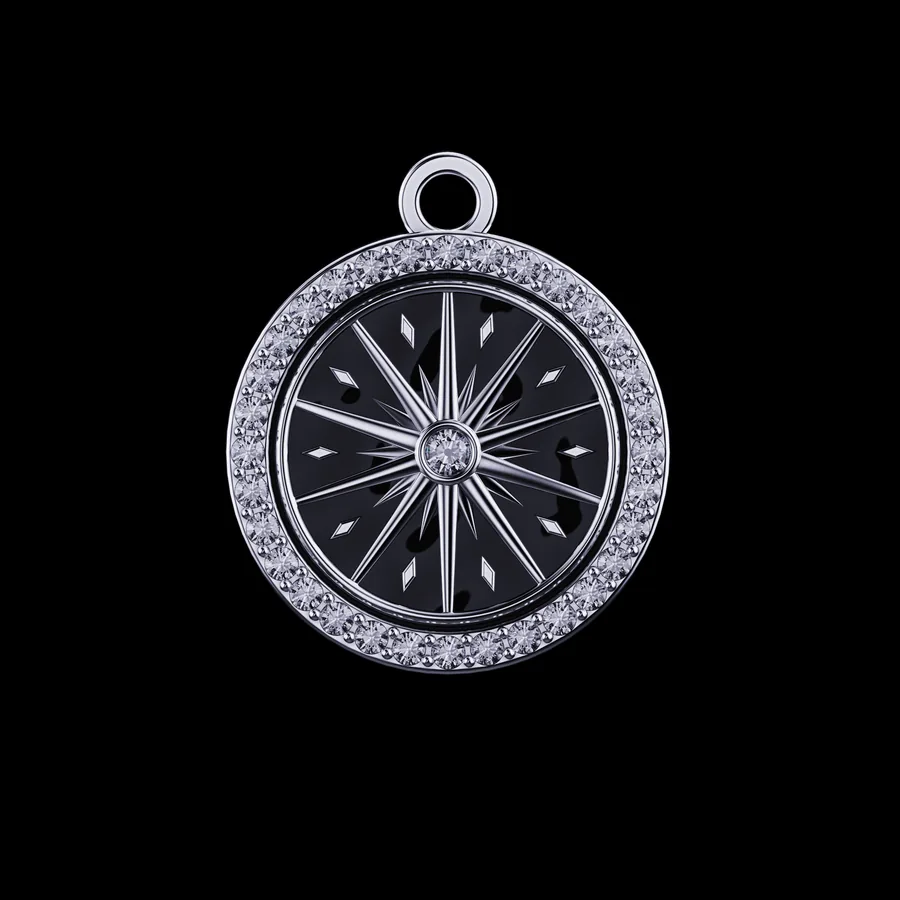
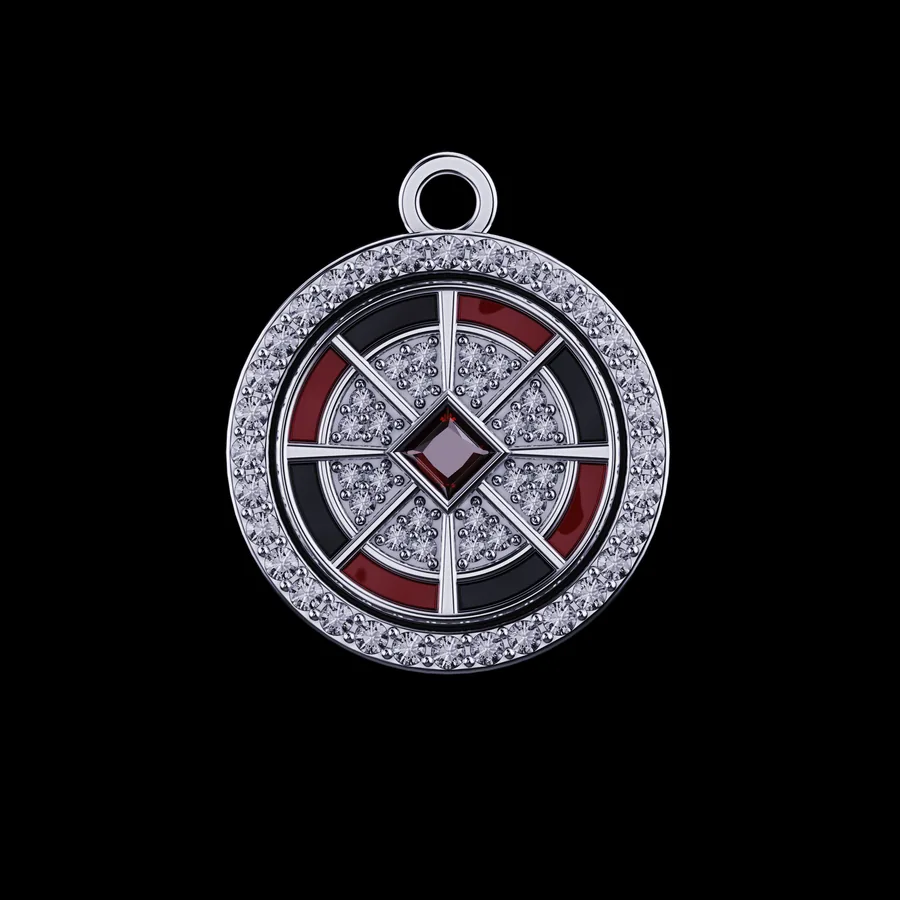
All of the metal that lands in a pendant was bought on the open market with revenue that came from somewhere real. Most protocols pay their holders out of trading fees. We pay ours out of trading fees and out of jewelry made real in this collection. A protocol whose only income is its own trading volume lives and dies by speculation. Our rewards come from two places: activity on-chain, and pieces cast and shipped, each one paid for through a contract anyone can read.
| Source | Split | Destination |
|---|---|---|
| Collection royalties | 70 / 20 / 10 | Metal into pendantsoperationsBench Reserve |
| $KARAT pool fees | 70 / 20 / 10 | Metal into pendantsoperationsBench Reserve |
| The launch, once | 100% | Every dollar raised becomes permanently locked liquidity. None of it reaches a treasury, and none of it reaches us |
| Activation, levels, Vault entry | 100% | Destroyed. Nothing is routed anywhere |
| $KARAT paid on purchases | 100% | Destroyed |
| Pieces made real | 5% (σ) | Metal pool, for every pendant still earning. Routed by the escrow contract when the hallmark mints |
Operations funding is drawn only from newly arriving fees and can never be recovered from value already credited to holders. Pool fees are our share of the trading fees earned by the launch liquidity, which is locked forever: we can collect the fees and nobody, including us, can withdraw the liquidity itself.
Sales within the collection.
Five percent of the retail price of every piece made real in this collection, σ, goes to the metal pool. It is set aside the moment the holder pays and released to the pool in the same transaction that pays the bench, when the hallmark mints. There is no attestation, no schedule and no term. The base it is computed from is the quote the price engine struck, which is on-chain before anyone pays.
Nothing sold outside the collection is counted. A share of sales elsewhere in the CryptoJeweler catalogue would rest on our word about our own revenue, and a contract cannot verify an invoice. A promise you cannot check is not one we will ask you to hold. Every element of the M3MORIES economy lives inside M3MORIES, where anyone can check it, piece by piece.
σ is a share of price, not of profit. Price is a number the engine publishes before you pay (§09); profit is a definition. It routes on thin months as well as good. The plainest way to say what this means: the way holders earn more is that more pieces get made. Not an announcement. Not a listing. Objects, cast and shipped, each one recorded on-chain.
The Bench Reserve.
A treasury accumulating ten percent of every fee source. It funds physical giveaways to randomly drawn pendants that are on, at published triggers, using the chain's verifiable randomness; in-person activations; and a fulfillment buffer against demand for pieces that outruns the bench. Under this design it also posts the fulfillment bond (§12).
The loop.
Fees come in from two engines. Metal lands in pendants. Around it goes.
Reading the loop. Trading activity and pieces made real generate fees. Seventy percent of those fees buy metal, gold, silver or platinum by each pendant's election, deposited each round into every pendant that is on. Because that balance is on-chain and travels with the pendant, a rising balance places a rising, verifiable floor under each pendant's resale value. Higher turnover feeds token demand twice: every new owner burns to activate, and holders burn further to climb. Making a piece real moves a full share out of the earning pool and leaves a tenth-weight soul behind. It also puts an object into the world that draws the next person in.
The metal itself does not compound. It sits in your pendant. Not staked, not lent, not deployed anywhere. It simply accumulates and waits for you. There is no strategy underneath it that can break.
Where the loop can stall. Earning depends on fee revenue. In periods of low trading and few pieces made real, pendants earn slowly and it takes correspondingly longer for a pendant to cover its price. Nothing in the mechanics guarantees a rate or a timeframe. Pieces made real dampen this by supplying an income that does not depend on trading. They do not eliminate it. σ is proportional to pieces made, and that varies.
Which produces an unusual alignment, and we think a healthy one: it is in every holder's interest for other holders to make their pieces real. One person's exit is everyone else's raise.
Everything that can be on-chain, is.
A pendant earns metal whether or not CryptoJeweler shows up tomorrow. The one thing no contract can do is cast it. So the design puts the whole economy on-chain, then bonds, escrows and publishes the one step that has to happen at a bench. Here is the honest map.
- Supply: 3,000 pendants and 1,000,000,000 $KARAT, both capped, both only falling
- Every burn and level, recorded against the token ID
- Round accounting and the payout split by level
- Custody of earned metal: keyed to the pendant, moved only by the wallet that holds it, only to that wallet. No owner, no pause, no upgrade, no recovery hatch on anything that holds value
- Fee splitters, the σ route inside escrow, and the Bench Reserve: pull-based routers with no admin key over principal
- The production queue, its ordering rule, and the soul registry
- Soul weights, fixed when the piece is made, and the 10% ceiling on their pool
- The price engine: every configured input, the formula, and the quote it strikes
- The buy keeper derives its own minimum acceptable fill from the pool's trailing average and allows a small maximum slippage. A failed or dishonest fill reverts and rolls into the next round. A broken keeper can delay a round; it can never divert one
- Anyone may trigger a round once it is due, by the day or by the fee threshold. Rounds do not depend on our servers
- Every parameter that can change sits behind a timelock with public notice; anything that holds value is immutable
- Metal prices come from Chainlink, read live. The engine bounds staleness and deviation and refuses to quote rather than quoting wrong
- Giveaway draws and queue ordering use commit-then-reveal randomness that neither we nor a miner can pre-select
- Casting, setting, finishing and shipping the piece
- The issuers of the metal instruments and of USDG, and the chain itself
- The launchpad, for the length of the launch only. It is not our contract, it holds the money raised until liquidity is locked, and §15 says plainly what that means
So the design does four things about it.
- Earned metal never leaves your pendant until you order. Nothing is custodied ahead of time
- When you order, payment goes into escrow, released to CryptoJeweler when the hallmark mints on shipment, or refunded to you after a published timeout
- The Bench Reserve posts a fulfillment bond against open orders
- The cap, the queue and every hallmark are public. Proof of delivery, order by order
Progressive decentralization.
"Completely decentralized" is a claim we will not make about the bench, and you should distrust anyone who makes it about theirs. What we will do is make every promise that can be checked, checkable, and bond the one that cannot.
Four ways in. All of them close.
Holders go first, with m3ntpoints earned by holding. Nothing is burned: Chains and EGG$ stay in the wallets that hold them. When the mint ends, every door closes forever, and the Vault becomes the only way in.
Every Chain earns m3ntpoints: half a point the day it lands, a full point after a year held. A 1/1 earns 10, a 1/51 physical 5, Flight Crew 3. Points buy passes on a ladder, and nothing is burned. Each pass arrives holding 25,000 $KARAT: 24,000 activates it at 10K, and 1,000 stays in the wallet.
An Egg earns a quarter of a Chain's m3ntpoints; an Ancestral Egg earns 3. EGG$ is its own pool, on top of any Chains allocation, and each pass arrives funded the same way. Nothing is burned, so the Egg merge is unaffected.
Holders of partner collections on Robinhood Chain register during a set window, one m3ntpoint for every NFT held. A public draw, seeded by a block that does not exist yet when the window closes, picks the winners. Each winner claims one pass. Nothing is burned.
The Vault, held back entirely and opened to anyone once the mint has closed. 240,000 $KARAT, burned.
| Who | Claims | How |
|---|---|---|
| Chains holders | 1,500 | m3ntpoints for every Chain held, spent on a ladder. Nothing burned |
| EGG$ holders | 500 | A quarter of a Chain's m3ntpoints per Egg, in its own pool. Nothing burned |
| Partners | 250 | Partner holders, by raffle. One m3ntpoint per NFT held. Nothing burned |
| The public sale | 750 | The Vault. 240,000 $KARAT, burned. Open to anyone once the mint has closed |
Every claim draws a random pendant from the same pool. A Vault claim and a Chains claim are the same draw, and both start at 10K. The difference is only in what it cost to get there.
Nothing is burned. Holders keep their Chains and Eggs, and with them storefront access and everything else those collections carry. A pass is spent from m3ntpoints, not from tokens. When the mint ends, the holder and partner doors close permanently. After that there is exactly one way to claim a new pendant: the Vault. Every route in becomes a route through the token.
How m3ntpoints work. A Chain earns half a point the day it lands in a wallet and a full point once it has been held a year. Rare Chains earn a fixed amount instead: 10 for a 1/1, 5 for a 1/51 physical, 3 for Flight Crew. An Egg earns a quarter of a Chain, and an Ancestral Egg earns 3. The clock starts at mint or purchase; a sale resets it, a move between your own wallets does not. A token listed for sale by its owner at the snapshot earns nothing.
The ladder. Points buy passes at a rising price, counted per holder and per pool: the first and second pass cost 1 point each, the third and fourth 2, the fifth to eighth 4, the ninth to fifteenth 8, the sixteenth to twenty-fifth 12, and every pass after that 20. The first pass is cheap for everyone; a large holder pays more for each additional one.
One holder, many wallets. Wallets that have moved Chains or Eggs directly between each other count as one holder, across both collections, and so do wallets linked on the CryptoJeweler site. Points pool within a holder and the ladder applies to the holder, not to each wallet, so splitting a collection across wallets earns nothing extra. A wallet that has moved tokens directly with more than three others is not linked this way. The allocation shown before the drop is provisional; a final snapshot freezes it before holder claims open.
No token airdrop, and no team allocation. Nothing is reserved for the team, for investors or for a treasury. The only $KARAT set aside is the holder reserve: 25,000 for each of the 2,000 holder passes, 50 million in all, 5% of supply. It arrives with the pass, not as an airdrop: 24,000 of each 25,000 is burned to switch the pendant on and 1,000 stays in the holder's wallet. Whatever the reserve still holds when the mint closes is burned. The other 950 million go into a public bonding curve: buyers take what they buy, the money raised pairs with what is left as liquidity that is then locked forever, and the remainder is burned on the spot. There is no allocation to unlock because there is no way to create one. Anyone can read the curve and price every buy on it before it opens.
What the launch venue can and cannot do. $KARAT opens on a public bonding curve. It caps how much of the supply any one wallet can buy, it opens on a published schedule, and the terms are fixed the moment the launch is created. They cannot be changed afterwards by anyone, including us. When the curve completes, the money raised is paired as liquidity and minted straight into a permanent lock with no withdrawal path for anyone, us included. What we keep is a share of the trading fees that liquidity earns, and that share is routed to holders (§10). We do not run the venue, and §15 says plainly what that means.
Every release should make the previous one worth more to the people holding it.
M3MORIES is distributed by rewarding the people who were already here. That is the template, not a one-off. If further collections follow, holders of M3MORIES, Chains and EGG$ come in on the same basis: allocation before the public, ratios that reflect what you already hold, and existing benefits carried forward instead of replaced. That is the commitment we intend to be judged on.
What happens when.
Gates
Before anything mints: contracts audited, addresses published in one place. Legal review of the metal rails and of who can hold what, by jurisdiction. The library costed in silver and platinum. Component volumes measured, bench rates agreed, and the price engine deployed and reconciled against hand-priced pieces. Production capacity, cap and lead time confirmed with the bench. The launch venue reviewed, and the exact terms of the curve published before it opens. The final snapshot date announced in advance.
Snapshot & claims
Snapshot published for Chains and EGG$: every token's m3ntpoints, the linked wallet groups, and each holder's passes. The allocation stays provisional until the final snapshot freezes it. Holder claims open first and partner claims follow; both close permanently at mint. Nothing is burned.
Launch
$KARAT opens on a public curve with 950 million loaded in; the only thing held back is the 50 million holder reserve (§13). When it completes, the money raised is locked as liquidity and the unsold remainder is burned. Holder and partner claims run alongside it; holder claims cost no $KARAT. The Vault opens only after the mint has closed and the pool is live, so a newcomer buys at a settled price rather than partway up a curve. Turning on and levels go live, pendants begin earning on the first round, and a public explorer opens: any pendant’s metal and level, readable by anyone.
Making it real
The catalogue publishes with metal content and a live price in each of the five metals for every piece, computed on-chain. Ordering opens. Choose the centerpiece, and it is set into the piece as it is made. The first pieces are fulfilled and documented end to end, from file to finished object, with the hallmark shipping alongside.
After
The Vault unlocks: 750 pendants, claimable only by burning $KARAT. Cross-collection pieces with other Robinhood Chain communities. Bench Reserve giveaways at published triggers. Then SIGN3T, the second collection, feeding the same token and the same holders.
What we are not promising.
The projects worth trusting are the ones that tell you how they can fail. Here is ours.
Your pendant's metal comes from trading fees and a share of every piece made real in this collection. If both are quiet, pendants earn slowly. We are not projecting volume, promising a rate, or saying when a pendant's earnings will cover its price. Your pendant shows you exactly where it stands. That is the only number that matters.
It cannot be earned, staked for more of itself, or held for a return. It is not equity in CryptoJeweler; it carries no ownership, no shareholder rights, and no claim on revenue or profits. It buys standing inside a jewelry program, and it is destroyed when spent.
Gold, silver and platinum can all go down. $KARAT is traded and can lose value quickly. A pendant's resale value is guaranteed by nothing except what it holds, which anyone can read before buying.
A pendant's floor is the metal it has earned. In the period right after launch, when pendants hold little, there is correspondingly little beneath a pendant's price.
Tokenized gold, silver and platinum on this chain are issued by a company, backed by a custodian, and are not available to residents of several countries including the United States. Where they cannot be delivered, a pendant earns an allocated-gold token if one is available, and otherwise dollars. The exposure is to the price of the metal, not to a bar with your name on it.
We will not rush quality to clear a queue. Orders are capped per period and the queue is public. If it grows, you will see it growing. Escrow and a fulfillment bond protect an order; they do not shorten a lead time.
Souls share a tenth of every round between them, so what one soul earns falls as more are made and rises as the system gets busier. It is permanent participation, not a promised return, and it confers no ownership of CryptoJeweler. It ends if you sell the piece.
Metal prices come from Chainlink. A stale or manipulated feed would mis-price a piece, so the engine bounds staleness and deviation and stops quoting rather than quoting wrong, which means the shop can close for a while. The bench rates, the per-carat figure and the multiplier are our numbers, published and timelocked, not market-set.
$KARAT opens on a public launchpad. Its code is published and readable and it has carried well over a thousand launches, but it has not been audited by an outside firm, and the people who run it hold an ordinary key that can change settings and recover funds. Two things bound that. The terms of our launch are fixed the moment it is created, so they cannot be altered afterwards. And the liquidity lock at the end is permanent. What is not bounded is the launch itself: until the curve completes, the money raised sits in their contract rather than ours. It is the one place in this design where value we do not control passes through a door we did not build, and it is temporary rather than removable. The launchpad also takes a small share of the trading fees on the curve, which is theirs and not ours.
Value reaching holders depends on the continued operation of the settlement layer, the exchange that supplies fees, and the issuers of the metal instruments and the stablecoin. A failure at any of those layers would affect this system regardless of whether its own contracts work exactly as designed.
Every on-chain system does, audited ones included. Contract addresses live in one place. We will never message you first, and never ask you to sign anything on another site.
Fee-funded earning scales with trading, and trading varies with interest in the system itself. Pieces made real supply demand that does not depend on trading. That does not remove the dependency, and it is not guaranteed to grow.
CryptoJeweler is a founder-led business with a small team and one qualified production relationship. That is a concentration. §12 exists because of it.
Some features may be unavailable in some places. Where that applies it will be stated plainly rather than buried.
The most personal thing you own, in the oldest store of value there is.
There is no shortage of collections that accumulate value. There is no shortage of jewelry brands. What has not existed is a single object that is both. One you own digitally, fill with something that means something to you, watch grow in a material you can hold, and eventually wear. The hard parts are already done. The components are modelled and costed. The production is qualified. The files a casting house needs are the files the collection is generated from. Five years of holders are already here. We are not asking anyone to believe a projection. We publish the mechanism and let the counters speak.
CryptoJewelerRobinhood Chain
Hold it. Let it earn. Then wear it.
See the drop and the four ways in.
Get a passPre-sale
Hear first when the pre-sale opens.
Whitepaper v2.2October 2026
M3MORIESCryptoJewelerRobinhood ChainWhitepaper v2.2October 2026. This document describes a proposed economic design and product mechanics. Parameters including supply, burn amounts, multipliers, fee splits, the σ rate and thresholds are as intended at time of writing and may be adjusted before launch; any change will be published. Figures used to illustrate the waterfall, the library and earning are worked examples, not projections; catalogue values are from when the library was priced and are repriced at launch. Nothing in this document is financial, investment, legal or tax advice, nor an offer or solicitation to buy or sell any security. $KARAT confers no equity, ownership, shareholder rights, or claim on revenue or profits. Digital assets carry risk of total loss. Tokenized gold, silver, platinum and other Stock Tokens are issued by third parties and are unavailable to residents of certain jurisdictions, including the United States. Availability of certain features may be restricted in some jurisdictions. Always verify contract addresses through official CryptoJeweler channels before signing any transaction.